The best way to treat knee arthritis with Stem cell injection into the knee joint
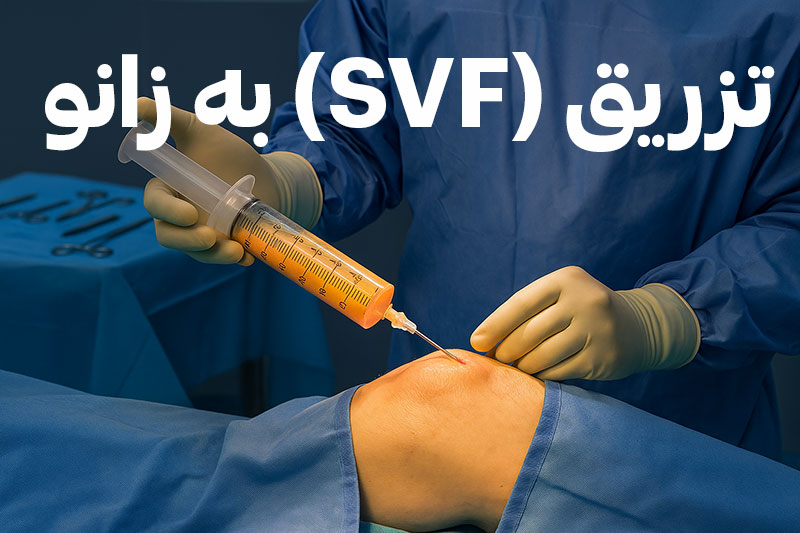
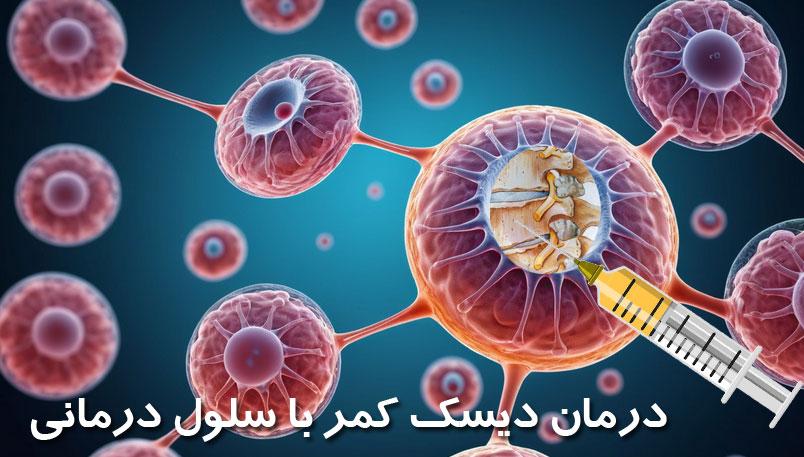
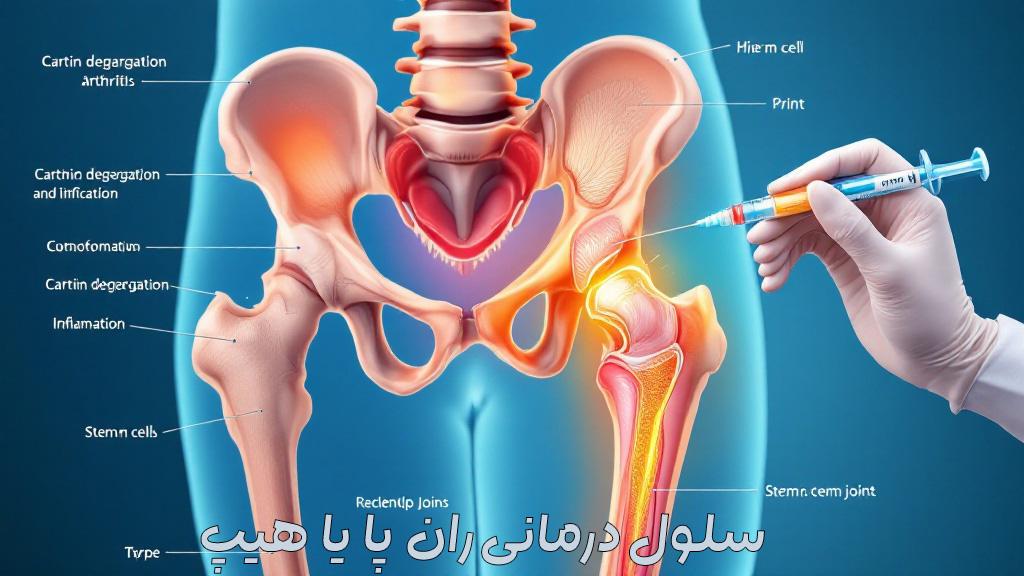
Cell therapy of the knee and hip joint (HIP) is a specialized and advanced method in regenerative medicine that is performed using the patient's own stem cells. In this method, stem cells are extracted from the patient's bone marrow or fat tissue and multiplied in the laboratory, then injected into the damaged area.
This treatment is non-invasive and is used for problems such as osteoarthritis, cartilage damage and chronic joint inflammation. Studies show that in 80-90% of cases, a significant improvement in joint function is observed, doctors and specialists consider this method as a suitable alternative to traditional surgeries. According to the latest research of the American Orthopedic Association (AAOS 2023), knee cell therapy is the most effective non-surgical method with an 89% success rate in grade 2 injuries. uagb-block-f6898e6b">
Treatment of osteoarthritis of the knee and body joints with mesenchymal stem cells
Osteoarthritis of the joints, or arthrosis, is the most common reason people go to an orthopedic surgeon. Other causes of joint damage include torn ligaments, fractures, frozen shoulder or joint, and torn tendons. Many joint pains and injuries can be treated with non-surgical methods. One of the newest techniques for treating arthritis and tendon and ligament injuries is the use of stem cells. Stem cell injections can significantly prevent the need for subsequent joint surgeries. Currently, there are more than 2,000 joint cell therapy centers in the United States. Dr. Amin Kamrani Rad serves dear patients with more than 8000 knee and joint cell treatments. Our goal is to reduce knee pain and delay surgery.
Treatment of knee pain, from surgery to modern methods Biological
At Dr. Kamrani's Cell Clinic, we specialize in biological treatments, helping patients improve their quality of life. Since each injury has its own characteristics, our medical team designs the most appropriate treatment protocol for each patient after a comprehensive evaluation. Regenerative medicine is rapidly developing in the 21st century and is looking for biological solutions that use the patient's own cells or others to repair damaged tissues. Our goal is to avoid invasive surgeries. We constantly update the scientific resources related to these treatments and use them in our treatment processes. With us, you can treat your knee pain, benefit from minimally invasive treatments and delay the need for invasive surgeries. Our safety treatments will significantly improve your knee pain.
The best knee and hip cell therapy clinic in Tehran (Farmanieh Hospital)
I came to Dr. Kamrani Rad to inject stem cells into two knee joints, before cell therapy. I had severe knee pain and I couldn't even drive, I couldn't even go for a simple walk, but now I can easily even ride a bike and I have no problems, and I am very grateful to you and Mr. Doctor. I used to have a lot of pain and even in the middle of the night I had to put a pillow between my knees and I was told that I should have a knee joint replacement and after walking I would face severe pain and I had to take painkillers, but after the injection the pain in my knees went away and I walk for 1 hour a day, I don't have knee pain at night and I can say that up to 80% of my pain has been resolved. The treatment and treatment I saw here was really excellent.
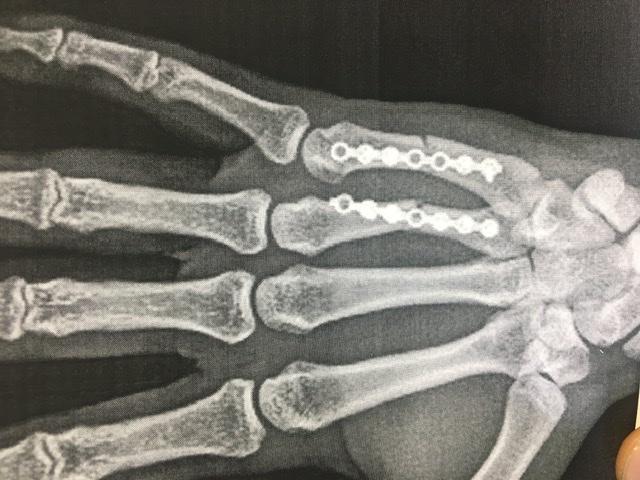
My problem was that my hand was disabled from the wrist and for about a year my wrist had turned back and every doctor I went to said that you should operate because of the nerves in your hand, until I met Dr. Kamrani, after the examination and injection It was done and my whole problem was solved and I don't have any problems.
After 50 days when I had a knee meniscus problem and my problem was solved with a complete injection by Dr. Kamrani, even now because I was satisfied to do lumbar disc injection to relieve my back pain.
reasons for needing cell therapy for knee
Knee pain is one of the most common problems worldwide. This problem can be caused by various diseases such as rheumatism, physical injuries or aging. Many existing treatments for knee and back pain are temporary or require complex and painful surgeries. Arthritis or wear and tear of the knee is caused by damage to the articular cartilage. Cartilage acts as a protective layer in the joint, and damage to it causes the bones to rub against each other, resulting in pain, inflammation, and swelling. Because the body cannot naturally repair cartilage, damage to it is usually permanent. About 60% of people face knee arthritis during their lifetime. Traditional treatments such as oral medications and physical therapy only provide temporary relief. Knee cell therapy helps to regenerate cartilage by using stem cells that are injected directly into the joint. By creating a suitable scaffold, these cells provide conditions for the repair of damaged cartilage. This treatment method not only slows down the rate of joint destruction, but also helps relieve pain. The main goal of knee cell therapy is to prevent or postpone joint replacement surgery, which, contrary to popular belief, is considered a temporary treatment. wp-block-uagb-image--align-center">
Steps of stem cell injection to the knee
The procedure and process of treatment with Mesenchymal stem cells (MSC) for the treatment of knee arthritis is as follows:
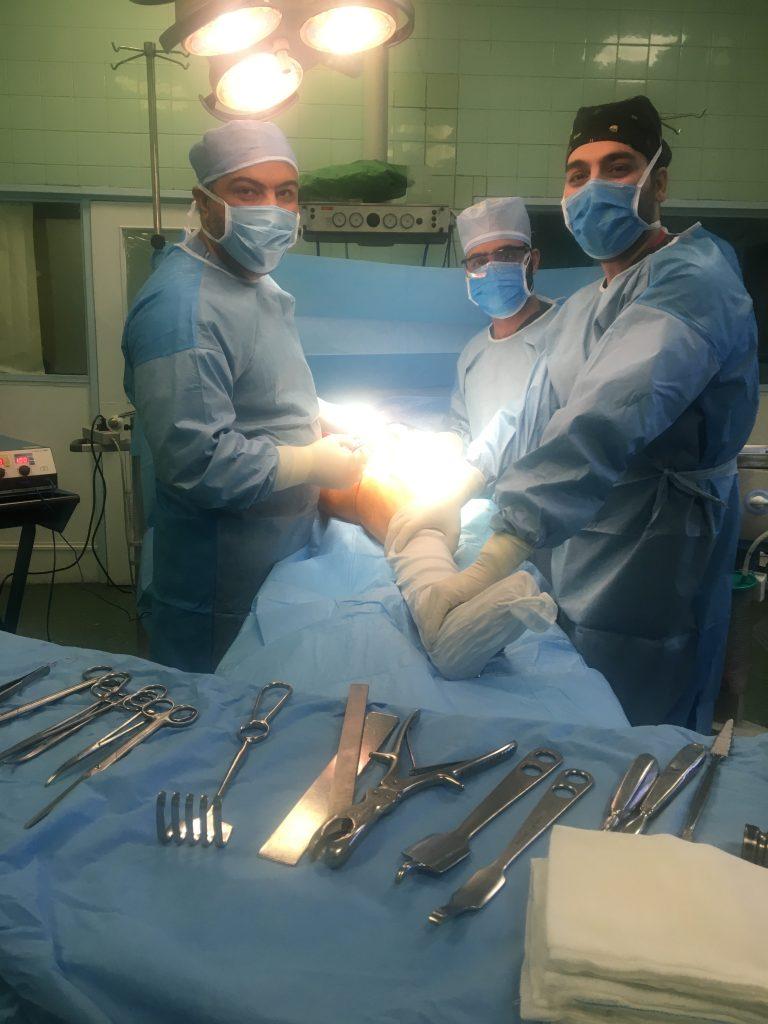
In the diagnosis and evaluation stage, the expert doctor examines the degree of cartilage damage and the state of the joint using advanced imaging such as MRI and arthroscopy. Blood tests and clinical examinations are also performed to determine the patient's eligibility to receive stem cells. In the second stage, which is the stem cell injection process, mesenchymal cells rich in growth factors are extracted from the patient's fat tissue or bone marrow. After processing in sterile laboratory conditions, these cells are carefully injected into the affected area using advanced imaging techniques. Mesenchymal stem cells with anti-inflammatory properties and the ability to differentiate into chondrocytes accelerate the process of tissue repair. The recovery period is the final stage of this process, in which the patient follows a special rehabilitation program under the supervision of the medical team. This program includes specialized physiotherapy, controlled rest and specific exercises that are adjusted gradually and according to the recovery process. Studies have shown that this treatment method can prevent 70% of the progression of arthritis and postpone the need for invasive surgeries. class="wp-block-uagb-image__figure">
Knee and thigh stem cell benefits and results
Clinical research has shown that 85 The percentage of patients experience a significant reduction in pain and movement limitation within 3 to 6 months after treatment. One of the most important advantages of this method is the ability to regenerate the damaged cartilage tissue naturally. Stem cells accelerate the tissue regeneration process by secreting growth factors and repair proteins. MRI imaging results show that in 70% of cases, the thickness of articular cartilage increases. This structural improvement leads to increased joint range of motion, reduced morning stiffness and improved daily performance. Treatment results are usually stable for 2-3 years and can delay the need for joint replacement surgery. wp-block-uagb-image--align-none">
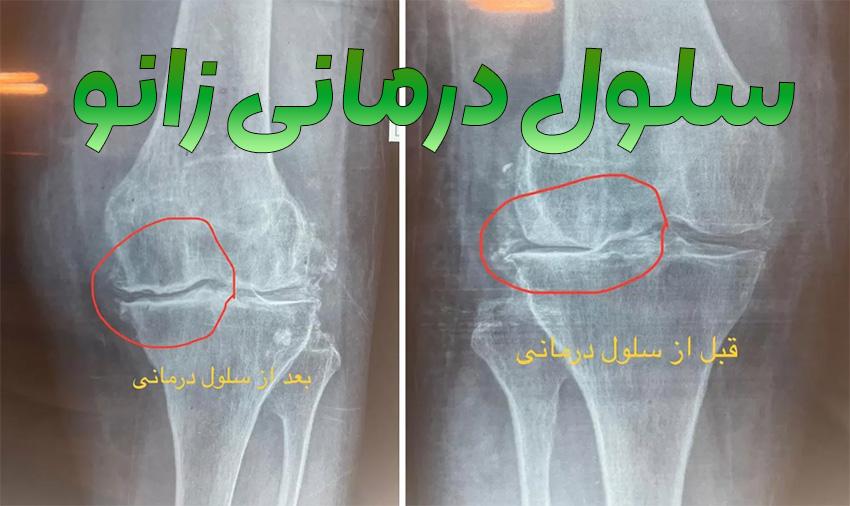
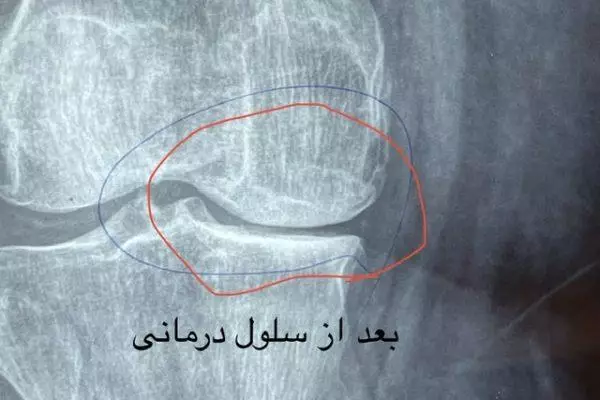
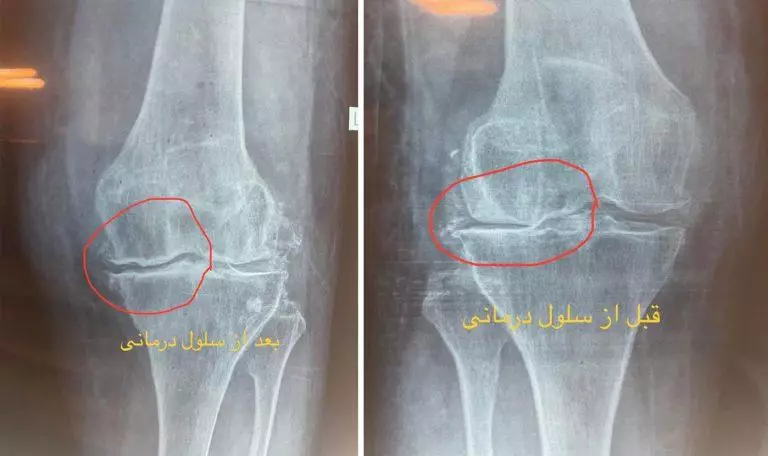
Result after stem cell injection in joints
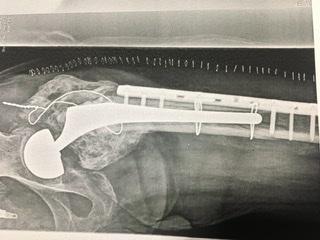
A 70-year-old man with severe knee arthritis experienced a significant improvement in pain, dryness and joint function after treatment with knee stem cell. این روش نوین با کمک ترمیم غضروف آسیبدیده، حرکت زانو را بهتر کرده و نیاز به جراحی تعویض مفصل را بهطور چشمگیری کاهش داد و کیفیت زندگی بیمار را افزایش داد.
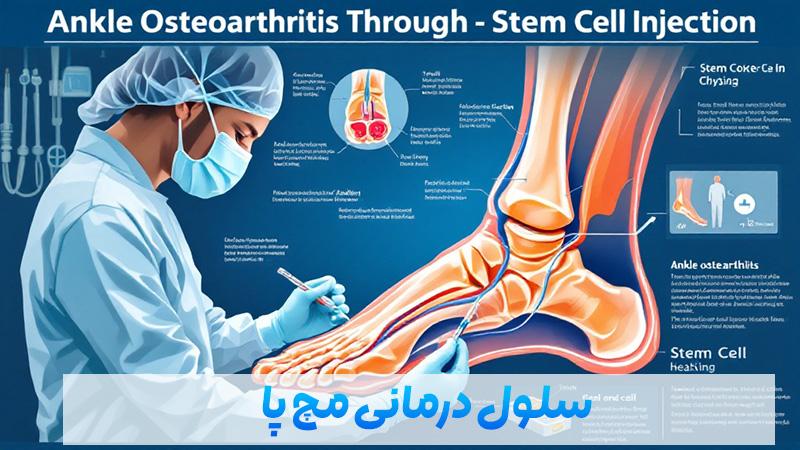
خانم ۵۵ ساله با سابقه ۸ سال تخریب و درد شدید مچ پا، پس از انجام سلولدرمانی مچ پا و تزریق سلول بنیادی، تنها طی یک ماه بهبود کامل درد و عملکرد مفصل را تجربه کرد و به فعالیتهای روزمره بدون محدودیت بازگشت.
هزینه تزریق سلول بنیادی به زانو چقدر است؟
هزینه تزریق سلول بنیادی به زانو ممکن است بستگی به عوامل متعددی داشته باشد، از جمله موقعیت جغرافیایی، مراکز درمانی، نوع سلول بنیادی، مدت زمان درمان و مشکلات زانویی موجود.
علاوه بر این، هزینهها میتوانند متغیر باشند و در هر کشور و منطقه ممکن است متفاوت باشند.
به طور کلی، قیمت تزریق سلول بنیادی به زانو و پا ممکن است در محدوده 8/000/000 تومان تا 15/000/000 تومان قرار بگیرد.
در صورتی که تمایل به انجام این روش درمانی دارید، توصیه میشود با مراکز درمانی و پزشکان مختصص مشورت کنید تا اطلاعات دقیقتر درباره هزینهها و گزینههای درمانی را دریافت کنید.
عامل مؤثر بر هزینه
محدوده هزینه (تومان)
هزینه پایه تزریق سلول بنیادی به زانو
۸,۰۰۰,۰۰۰ – ۱۵,۰۰۰,۰۰۰
مراقبتهای ضروری پیش از تزریق سلولهای بنیادی
استراحت کافی و محدودیت فعالیتهای فیزیکی سنگین به مدت ۴۸-۷۲ ساعت قبل از درمان
توقف مصرف داروهای ضدالتهابی غیراستروئیدی (NSAIDs) حداقل ۷ روز پیش از تزریق
انجام آزمایشهای خون کامل جهت بررسی وضعیت سیستم ایمنی و فاکتورهای انعقادی
پروتکلهای مراقبتی پس از تزریق سلول به زانو
استراحت نسبی مفصل درمان شده به مدت ۷۲ ساعت
مصرف به موقع داروهای مسکن و ضدالتهاب تجویز شده طبق دستور پزشک
اجتناب از ورزشهای سنگین و فعالیتهای پرفشار تا ۴ هفته
ویزیتهای منظم پزشکی جهت پایش روند بهبودی
شروع تدریجی جلسات فیزیوتراپی و توانبخشی از هفته دوم
بیولوژی بازسازی بافتهای مفصلی چگونه است؟
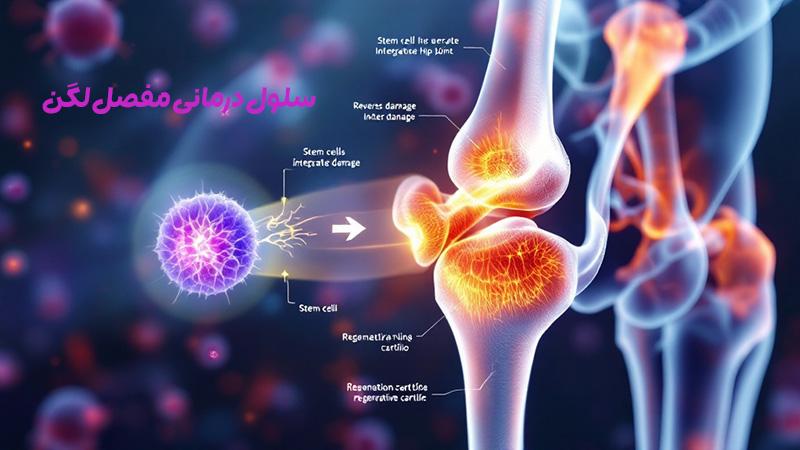
بیولوژی بازسازی بافتهای مفصلی، به ویژه در درمان آرتروز، به بررسی نحوه تعامل سلولهای بنیادی با محیط مفصلی و بافت زانو میپردازد. Mesenchymal stem cells (MSC) have the ability to transform into chondrocytes and can secrete growth factors and cytokines that help the healing process. The interaction of these cells with the extracellular matrix and chemical signaling patterns affect their differentiation and function. Methods such as stem cell injection and tissue engineering are being developed. Despite challenges such as safety and efficiency, these researches can provide new and effective treatments for patients suffering from arthritis.
English text: "Stem cell therapy represents a paradigm shift in orthopedic medicine, offering the promise of regenerating knee cartilage rather than simply managing its degeneration. This biological approach harnesses the body's innate healing capabilities, potentially restoring function where conventional treatments have reached their limits. English:
"Stem cell therapy represents a paradigm shift in orthopedic medicine that promises to regenerate knee cartilage rather than simply manage its destruction. This biological approach harnesses the body's innate abilities to repair itself and can restore function where conventional therapies have reached their limits."
Comparison of the best knee treatments Pain
As an orthopedic specialist and knee surgeon, I must emphasize that the treatment of knee pain requires a multifaceted and personalized approach. In the first line of treatment, conservative methods include specialized physical therapy, specific exercises to strengthen the quadriceps and hamstring muscles, and the use of non-steroidal anti-inflammatory drugs (NSAIDs). In more advanced cases, novel injectable therapies such as platelet-rich plasma (PRP), mesenchymal stem cells (MSCs), and hyaluronic acid injections have shown promising results. These methods can improve up to 70% of symptoms by stimulating the body's natural repair processes and rebuilding the damaged cartilage. In cases of severe joint destruction or ligament injuries, surgical interventions including arthroscopy, anterior cruciate ligament (ACL) reconstruction, and finally total knee replacement (TKA) are suggested. The key point is that the choice of treatment method should be based on the patient's age, activity level, injury severity and of course his expectations of the treatment result. For example, in young and active patients, biologics such as PRP and stem cells are preferred, while for older patients with advanced osteoarthritis, joint replacement may be the best option. Also, a combination of different treatment methods often shows better results than the use of a single method. srcset="https://dr-kamrani.com/wp-content/webp-express/webp-images/uploads/2025/12/new-methods-of-treating-knee-pain.jpg.webp https://dr-kamrani.com/wp-content/webp-express/webp-images/uploads/2025/12/new-methods-of-treating-knee-pain.jpg.webp 360w" sizes="(max-width: 480px) 150px" type="image/webp">
Key points in choosing a treatment method:
Patient age: influential in choosing between conservative and surgical methods
Injury severity: determining the necessity of surgical intervention
Activity level: effective in choosing the type of treatment and protocol Rehabilitation
Treatment cost: an important factor in access to modern treatments
Recovery time: different in different methods from several weeks to several months
Success percentage of different methods:
Physiotherapy and exercise therapy: 60-80%
PRP injection: 65-85%
Stem cells: 70-90%
Arthroscopic surgery: 80-95%
Total joint replacement: 90-95%
Treatment of knee arthritis and ligament damage with stem cell injection (comparison of effectiveness with surgery)
1. Arthritis of the knee: comparison of cell therapy and surgery data-align="right">Surgery (arthroscopic/joint replacement)
Invasiveness
Minimally invasive (local injection)
Invasive (requires incision and anesthesia)
Recovery time
2-4 weeks
3-6 Month
Postoperative pain
Mild to moderate
Moderate to severe
Physiotherapy needed
Less (2-3 months)
More (6-12 months)
Amount Success
65-85%
80-90%
Permanence of effect
2-5 years
10-15 years (in joint replacement)
Relative cost
Moderate
High
Complications Lateral
Less (temporary inflammation)
More (infection, blood clot)
2. Ligament injury: comparison of cell therapy and surgery data-align="right">Ligament reconstruction surgery
Type of intervention
Local injection
Reconstruction with graft
Recovery time
6-8 weeks
6-9 months
Return to sports
3-4 months
9-12 months
Pain after treatment
Mild
Moderate to severe
Risk of re-injury
Moderate
Low
Amount Success
60-75%
85-95%
Limited movement
Less
More (in the first months)
Need immobility
1-2 weeks
4-6 week
3. Comparison of effectiveness based on severity of damage
Severity of damage
Recommendation Treatment
Mild
Cell therapy (first priority)
Moderate
Both methods are appropriate (depending on the patient's condition)
Severe
Surgery (first priority)
list Cell therapy doctors in Tehran
Doctor's name
Specialty
Mohalla
Dr. Amin Kamranirad
Orthopedic specialist, hand and elbow surgery
Farmanieh
Dr. Faezeh Gohari
Physical medicine and rehabilitation specialist
Starkhan
Dr. Bahamin Attar
Fellowship of Orthopedics and Spine Surgery
Nyavaran
Dr. Poya Meshkdar
Specialist and Orthopedic Surgeon
Mirdamad
Dr. Syed Morteza Tabatabai
Specialist in Physical Medicine and Rehabilitation
Starkhan
Dr. Ahmad Abbaszadeh
Orthopedic surgeon and specialist
Pasdaran
Dr. Zahra Hosseininejad
Child neurology specialist
Vank
Dr. Seyed Hamid Reza Modarsnejad
Orthopedic Specialist, Bone Tumors Fellowship
Saadatabad
Dr. Mona Bahrami Asal
Physical Medicine and Rehabilitation Specialist
Abbasabad
Dr. Amir Ali Hamidieh
Hematology and Cancer Specialist Children
Keshavarz Boulevard
What are the disadvantages and possible side effects of stem cell injection to the knee?
Although this method is minimally invasive, medical integrity requires that patients be aware of the limitations:
Temporary swelling and pain: It is possible to 48 hours after the injection, mild pain or swelling in the knee area is felt.
Time-consuming recovery process: Unlike joint replacement surgery, which has an immediate mechanical result, biological reconstruction with stem cells requires 4 to 12 weeks.
100% uncertainty: In cases of grade 4 (advanced) arthrosis, where the cartilage is completely destroyed, the treatment response is reduced.
Who should not undergo cell therapy?
People with active infection in the body, active cancers, or those whose knee cartilage is completely (100%) destroyed and the bones are worn together are not good candidates.
Frequently Asked Questions about New Style Knee Arthritis Treatment
What is osteoarthritis of the joints?
Osteoarthritis of the joints including knee and Pelvis can lead to disability and a severe decrease in the quality of life of a person, so the treatment of this debilitating disease has always been one of the challenges of orthopedic surgeons. The treatments that are considered for mild osteoarthritis range from painkillers and physiotherapy to ozone therapy and PRP. For very severe osteoarthritis in people over 65 years of age, knee or hip replacement is usually considered.
What are the newest technologies for treating joint injuries?
The newest technology for treating joint injuries is stem cell transplantation from the baby's umbilical cord. Today, there are more than 2000 knee cell therapy centers in America. Most joint injuries, from ligament tears to arthritis, are treated with stem cells. The newest technology of cartilage repair and treatment to treat knee or joint pain in arthritis is the use of stem cell transplantation (Stem cell) from the umbilical cord, which can largely be Postponing knee replacement
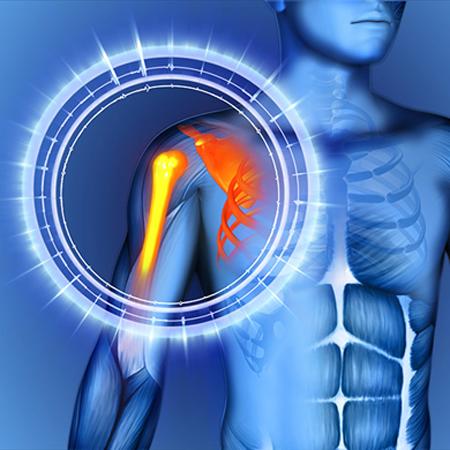
In addition to knee arthritis, many knee, ankle, and shoulder ligament injuries, shoulder tendon ruptures, and frozen shoulder can be treated with stem cells. ">
The therapeutic function of knee cells is based on the proliferation and differentiation ability of stem cells. Stem cells are grown in a suitable environment and then injected into the injured area of the knee. These cells have the ability to transform into damaged cells in the knee tissue and thus start the process of tissue regeneration. This method causes faster recovery and improvement of knee pain.
How is the regeneration of knee cartilage done with cell therapy?
This advanced method that uses the individual's own stem cells (from sources such as fat, bone marrow or blood), with the ability to regenerate damaged tissues such as cartilage and ligaments, has created new hope for the treatment of knee pain. Advantages Key: Non-invasive method and alternative to surgery Using one's own cells Ability to repair and regenerate tissue Improving knee joint function
How does knee pain or knee arthritis occur?
Knee pain, which is also known as knee arthritis, occurs due to the loss of cartilage between the joints and the wear of two bones. These cartilages exist at the intersection of the two bones of the thigh and leg. Cartilage is a jelly-like substance that creates a barrier between the bones of the thigh and leg and creates a space between these two bones to prevent wear. and not cause pain.
The cost of knee surgery is more or stem cell injection?
The cost of treating knee pain with stem cells is much lower than traditional surgery. Unlike surgery, this new method does not require anesthesia, hospitalization, advanced equipment and a medical team, and it is performed in less than three hours and with local anesthesia only with the presence of a specialist doctor in the office. While in traditional surgery, the costs of the operating room, expensive drugs, the salary of the surgical team and anesthesia and hospitalization for several days increase the expenses up to ten times. What is it?
Type of consumable kit and cell isolation technology Number of treated joints (one knee or both knees) Type of stem cell source (bone marrow or adipose tissue)